Trusted Denver Locksmith Service Team
Local locksmith team
Jun 12, 2026 12 min read
If you have ever walked out to your car on a January morning near Washington Park or tried to get into your front door after a freeze-thaw night along the I-25 corridor, you already know the particular frustration of a lock that simply will not turn. Denver winters are deceptive — mild one afternoon, single digits by midnight — and that temperature swing is exactly what turns a perfectly functional lock into a stubborn, icy puzzle. The good news is that most frozen lock problems have straightforward solutions, and knowing which fix to use (and when to stop and call a professional) can save you time, prevent damage, and keep your home or vehicle secure.
This guide walks you through why Denver door locks freeze and jam, what you can safely do about it yourself, and when the smarter move is to reach out to an experienced locksmith. Whether you are dealing with a frozen door knob lock on your front entry, a seized mortise lock on an older Denver bungalow, or an electronic keypad that stopped responding in the cold, there is practical, actionable information here for you.
## Why Denver's Freeze-Thaw Cycle Is Especially Hard on Door Locks
Denver sits at 5,280 feet, and that elevation changes the game for moisture. During a typical Colorado winter, daytime temperatures can climb above freezing while nighttime lows plunge well below it — sometimes by 40 degrees or more in a single day. Water seeps into lock mechanisms through worn weatherstripping, condensation, or rain, and then expands as it freezes overnight. Over repeated cycles, this expansion warps internal pins and springs, corrodes metal components, and causes lock cylinders to seize mid-turn. Older mortise locks — the deep, rectangular-bodied locks common in Denver's Capitol Hill and Wash Park historic homes — are particularly vulnerable because their larger housings trap more moisture and have more moving parts that can bind.
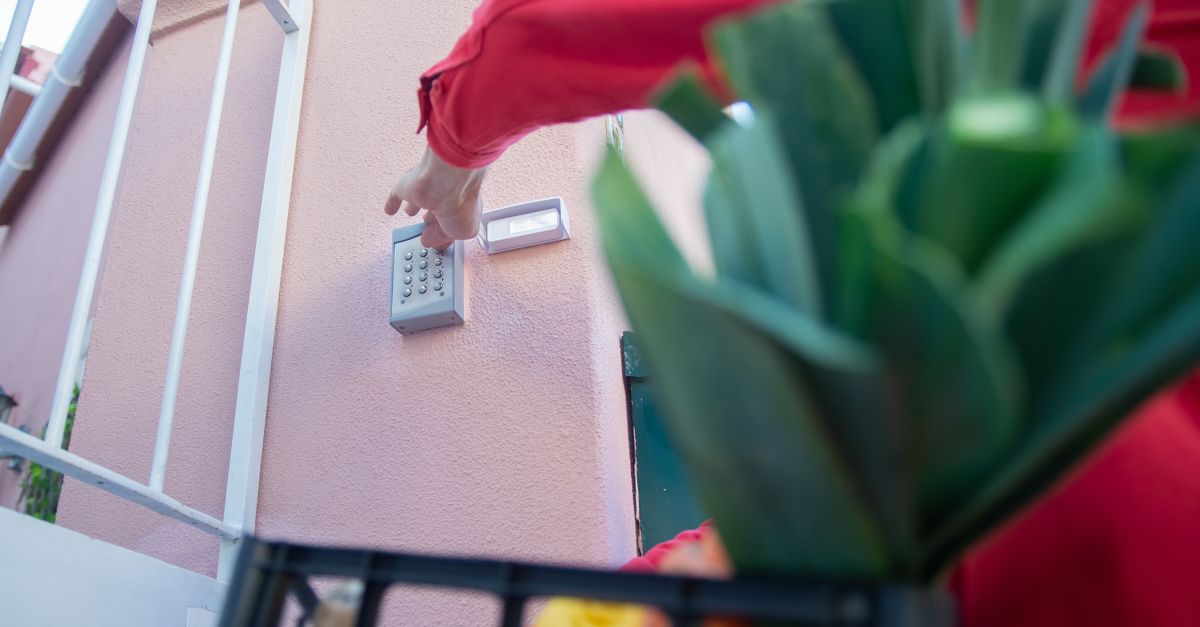
Door knob locks on exterior doors face the same problem from a different angle. The small keyway opening on a door knob lock acts almost like a funnel, drawing in cold air and allowing condensation to form directly on the pins and springs inside the cylinder. When that moisture freezes, the lock may accept your key but refuse to rotate, or it may not accept the key at all. Electronic keypad locks have their own winter quirk: batteries drain faster in extreme cold, and the keypad face itself can ice over, making it impossible to change a door lock code or even read the buttons. Understanding the root cause — moisture plus temperature swing — is the first step toward the right fix.
## Safe DIY Fixes for a Frozen Door Knob Lock or Keypad
For a frozen door knob lock or deadbolt, the most effective first step is a commercially available lock de-icer spray, which uses a fast-evaporating solvent to displace moisture. Apply it directly into the keyway, wait about 30 seconds, then insert your key slowly and apply gentle, steady rotational pressure — never force it, because a cold key and a cold lock cylinder together can break a key off inside the lock, turning a minor problem into a much bigger one. If you do not have de-icer on hand, warming the key itself (hold it near a vent or warm your hands around it) can transfer just enough heat to free a lightly frozen cylinder. Hand sanitizer containing isopropyl alcohol is a widely cited home remedy that genuinely works in a pinch — its alcohol content lowers the freezing point of the ice inside the keyway. For keypad locks that are unresponsive, start with fresh batteries swapped out somewhere warm before you assume the lock mechanism itself has failed. If your keypad is working but you need to change the door lock code after a freeze event caused you to trigger a lockout mode, consult your specific model's manual — most Schlage or Kwikset smart locks walk you through a reset sequence that does not require the original code.
What you should not do: avoid using open-flame heat sources like lighters or heat guns directly on a lock cylinder, as this can damage the internal components, melt weatherstripping, or in worst cases create a fire hazard. Do not pour hot water over a frozen lock — the rapid temperature change can crack the cylinder or the door hardware, and the water will simply refreeze. And resist the urge to force a key that is not turning. If gentle pressure and a de-icer have not freed the lock within a minute or two, it is time to try something else — or call for help. If you are locked out and none of these steps are working, check for a secondary entry point (a back door, a garage access, or a spare key held by a neighbor) before assuming you need emergency lock repair. When those options are exhausted, that is exactly the scenario our team handles every day.
## When You Need an Emergency Locksmith — Mortise Lock and Beyond
Some freeze-and-jam situations go beyond a quick spray and a warm key. A mortise lock that has been through multiple Colorado freeze-thaw cycles without lubrication may have bent or corroded levers that will not function correctly even after the ice clears. In these cases, forcing entry yourself risks damaging a door frame, a deadbolt, or the mortise lock body itself — repairs that cost significantly more than a professional service call. This is when reaching out to an experienced emergency locksmith makes clear financial and practical sense. Our mobile team carries the specialized tools to safely free or service a mortise lock on-site, without tearing up your door or doorframe.
Frozen car locks and ignitions are another common Denver winter scenario. When a vehicle door lock cylinder ices over — especially in unheated street parking on streets like Colfax or Federal Boulevard — the temptation is to pry at the handle or jam something into the lock. That approach can snap the lock cylinder, damage the door panel, or trigger your vehicle's anti-theft system. A skilled locksmith can address a frozen auto lock without any of those consequences, and if your key fob battery also died in the cold, we can handle that as well. Whether it is a residential door knob lock, a commercial-grade mortise lock on a business entry, or a vehicle door, do not hesitate to call (704) 850-6756 — we answer every call, 24 hours a day, seven days a week.
## Prevention: Keeping Your Locks Working Through a Denver Winter
The single most effective thing you can do before winter arrives is lubricate every exterior lock cylinder with a dry graphite lubricant or a Teflon-based product. Avoid WD-40 as a long-term lock lubricant — while it displaces moisture effectively, it leaves an oily residue that attracts dirt and can gum up pin tumblers over time. A dry lubricant applied in October and again in January is usually sufficient for most Denver winters. For mortise locks, a qualified locksmith can disassemble, clean, and re-lubricate the entire mechanism as part of a routine service visit, which is especially worthwhile on older doors that are original to a home built in one of Denver's historic neighborhoods. Replacing worn weatherstripping around your door also dramatically reduces the amount of moisture that reaches your lock hardware in the first place.
For homeowners wondering about longer-term security upgrades, a freeze event is often the right moment to evaluate whether a lock change makes sense — swapping out an aging, corroded lock cylinder for a new, properly fitted one. If you have had tenants or roommates cycle through your home and you are not certain who holds copies of your key, asking how to rekey a lock is a smart security question. Rekeying reconfigures the internal pins to work with a new key without replacing the entire hardware, and it can absolutely be done even if you no longer have the original key — a common situation our team handles routinely. A professional can also walk you through how to change a lock or change a door lock code on smart locks so your access credentials are fresh heading into a new season.
## Trusted Denver Locksmith: What We Do and How It Works
Trusted Denver Locksmith is a fully mobile, insured locksmith operation serving the entire Denver metro area around the clock. Our experienced technicians stock vehicles with equipment to handle a wide range of services on the spot, including: residential lockouts, commercial lockouts, mortise lock repair and replacement, door knob lock rekey and installation, deadbolt installation, smart lock programming, keypad lock code changes, car lockouts, car key replacement (including lost-all-copies scenarios where a locksmith makes a key from scratch for your vehicle using your VIN and ownership verification), transponder key programming, key fob replacement, ignition lock repair, master key system setup, high-security lock installation, Schlage and Kwikset hardware service, lock cylinder rekeying without the original key, safe lockouts, mailbox lock replacement, garage door lock service, sliding door lock repair, commercial-grade deadbolt installation, access control consultation, broken key extraction, storefront lock service, apartment building master rekeying, and emergency door frame repair assessment following a forced entry.
When you call us, here is what happens: a real person answers, we confirm your location and the nature of the job, and a technician is dispatched immediately. Before any work begins, we provide an exact up-front price based on the specifics of your situation — the type of lock involved, the time of day, travel distance to your location, and any parts or hardware required. There are no surprise charges after the fact. We accept multiple payment methods including major credit and debit cards, cash, and digital payment options — just ask when you call. Our hours? We are open every hour of every day, including holidays, because lock emergencies do not follow a business schedule. If you have been wondering which states require a locksmith license, Colorado does not currently mandate state-level locksmith licensing — but that makes choosing a team with verifiable experience and insurance even more important, because not every operator you might find has the same standard of training. Our technicians are skilled, experienced professionals who take that responsibility seriously. Call (704) 850-6756 any time — day, night, blizzard, or the morning after one.
## A Note on the American Locksmith Tradition and What Good Service Looks Like
The American locksmith trade has deep roots in practical, community-based service — a trained professional who shows up, solves the problem with skill and the right tools, and leaves the customer more secure than they found them. That tradition matters to us. A good locksmith does not just pop a lock and leave; they explain what caused the problem, what was done to fix it, and what you can do to prevent it from happening again. That is true whether the call is a frozen mortise lock on a historic Denver rowhouse, a car lockout in the airport parking lot, or a business owner who needs a commercial locksmith to rekey an entire building after a staff change. Real service means treating your property with care, verifying ownership before any work is performed, and being transparent about the process from the first phone call to the last invoice.
Frequently asked questions
Can you rekey a lock without having the original key?+
Yes — this is one of the most common requests we receive, and an experienced locksmith can absolutely rekey a lock without the original key. The process involves disassembling the cylinder and reconfiguring the internal pins to match a brand-new key. It requires professional tools and skill to do without the original key present, but it is entirely routine for our team. It is also a smart security move any time you are unsure who might have copies of a previous key floating around — after moving into a new home, following a roommate change, or after losing a key.
Can a locksmith make a key for my car when I have lost all the copies?+
Yes. Losing every copy of your car key is stressful but completely solvable. Our technicians can generate a new key for most vehicle makes and models using your Vehicle Identification Number (VIN) and proof of ownership — typically your title or registration. For vehicles with transponder chips or proximity fobs, we carry programming equipment to pair the new key to your car's immobilizer system on-site. The final price depends on your vehicle's make, model, and key type, and we confirm that number before starting any work.
How much do locksmiths make in Colorado, and does that affect what I pay?+
Locksmith earnings in Colorado vary based on experience, specialization, and whether a technician works independently or with an established operation — it is a trade with real skill requirements and ongoing training demands. What affects what you pay for a service call is different: the factors are the type of lock or vehicle involved, the complexity of the job, the time of day, travel distance, and any parts needed. We quote an exact price upfront before any work begins so you always know what to expect.
Which states don't require a locksmith license, and should I care?+
Colorado is one of several states that does not currently require a state-issued locksmith license to operate. That makes it especially important for consumers to choose a locksmith who is insured, has verifiable hands-on experience, and is transparent about their process — because the absence of state licensing means the barrier to entry is lower, and not every operator has the same level of training. Our team is insured and made up of skilled, experienced professionals. We always verify ownership before performing any lockout service, which is a key practice that separates responsible operators from those who cut corners.